
Turning an Earned Opportunity into an eCommerce Transformation
My Role Lead Designer • UX/UI Design • eCommerce Strategy
Project Breakdown:
Overview
The Project I Wasn’t Going to Let Pass Me By
ECOMMERCE REDESIGN
UX/UI DESIGN
CONVERSION STRATEGY
RESPONSIVE DESIGN
When I first joined Road Runner Sports, I came in as a contractor working two to three days a week. The assignments were small. I worked fast. Said yes to pretty much everything. And over time, people started giving me more.
Then Kelly’s Running Warehouse came along. The brand needed a complete eCommerce redesign, and the project wasn’t automatically mine. I had to pitch for it. And I really, really wanted this one.
There was just one thing: I had never redesigned an entire eCommerce website before. So I did what I tend to do when something excites me. I went all in. I had three days to develop my ideas. I came back with a 41-page presentation.
No one asked me to do that much. I just saw an opportunity to do something bigger than the work I had been doing. I immersed myself in the brand, built my case, presented my thinking, and earned the project.
Suddenly, I was leading my first complete eCommerce redesign. Figuring out the experience. Rethinking how people shopped. Learning what eCommerce looked like beyond designing individual pages. Did I know exactly what I was doing yet? Not entirely. But I knew I wanted the chance to figure it out.
The Challenge
Kelly’s Running Warehouse wasn’t Road Runner Sports. It was built around discounted running shoes, apparel, and gear. Inventory moved fast. Products changed constantly. The website needed to keep up.
It wasn’t. The experience was dated, non-responsive, and difficult to navigate. Finding products took too much work. Merchandising was limited. And mobile shopping? There really wasn’t much of an experience at all.
So this couldn’t just be about making the website look better. We needed to rethink how people browsed, discovered products, found deals, and ultimately made a purchase. Pretty wasn’t going to be enough.
And for me, there was another layer. I had never designed an entire eCommerce experience before. Suddenly I was thinking about navigation. Product discovery. Merchandising. Responsive behavior. Conversion. I wasn’t designing another page anymore. I was figuring out how the whole thing worked.
The Pitch
41 Pages.
Three Days.
One Shot to Earn the Project.
I didn’t want to walk in with a few homepage ideas. If I was going to make the case for leading the redesign, I wanted to show that I had thought through the entire experience.
So I went bigger. Way bigger.
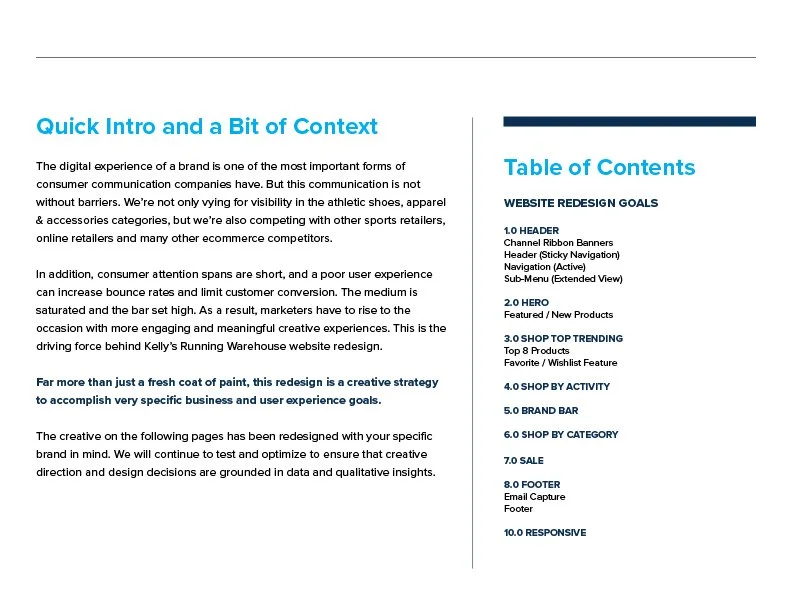
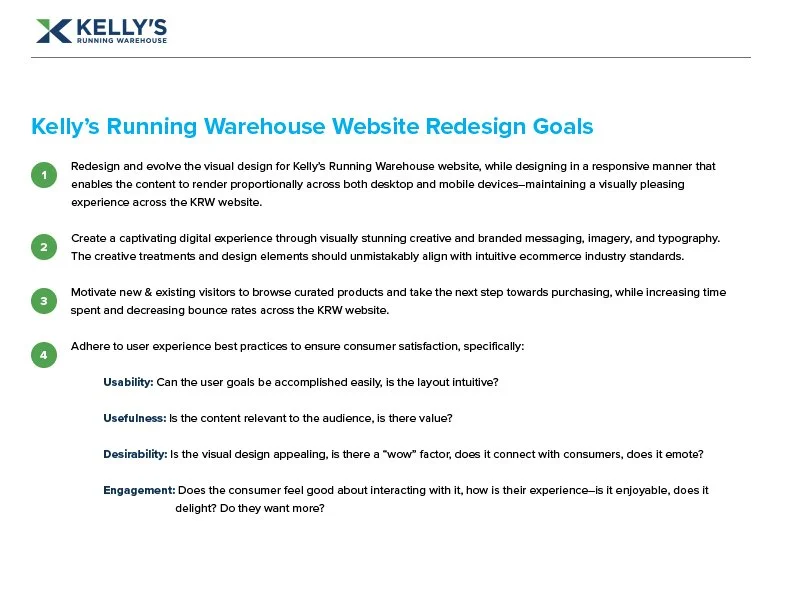
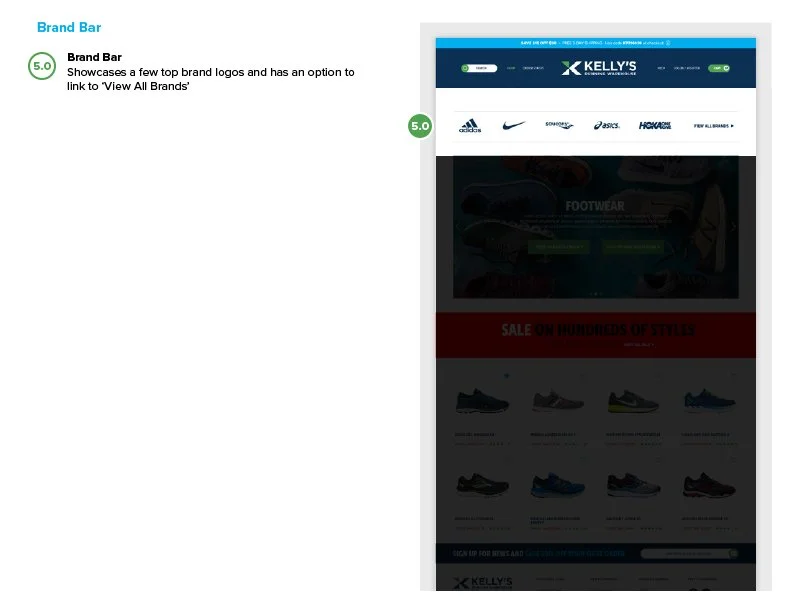
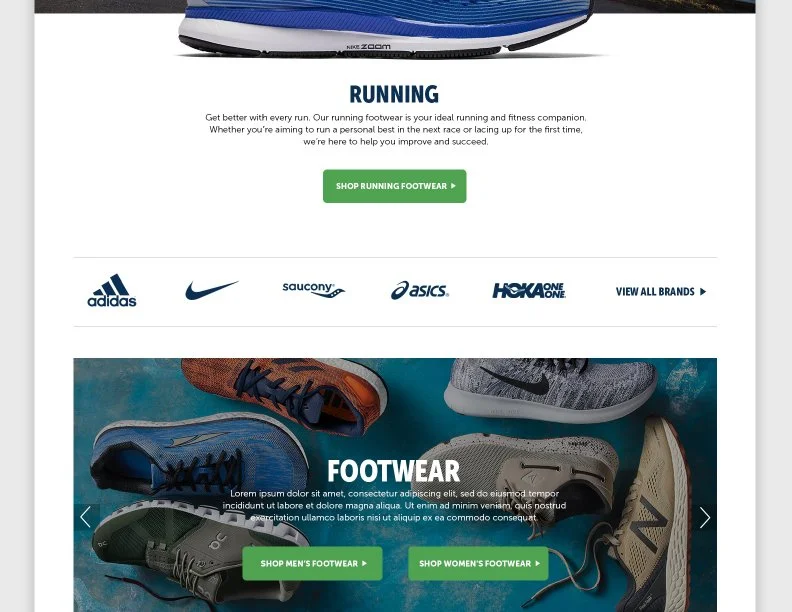
The 41-page pitch explored everything from the header and navigation to merchandising, product discovery, promotional moments, brand storytelling, mobile behavior, and the overall visual direction. It wasn’t meant to be a finished website. It was a vision for what Kelly’s Running Warehouse could become.
Was 41 pages excessive for a three-day pitch? Probably. But I wanted them to see how seriously I was taking the opportunity.
More importantly, the presentation showed that I wasn’t thinking about the redesign as a collection of individual pages. I was starting to think in systems. How everything connected. How customers moved through the experience. And how design could support the needs of the business.
I presented it. I made my case. I got the project.

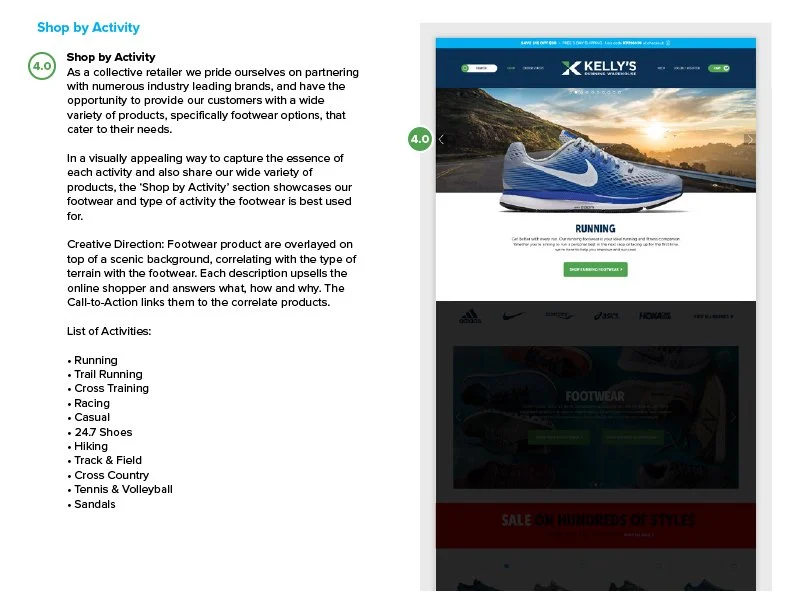
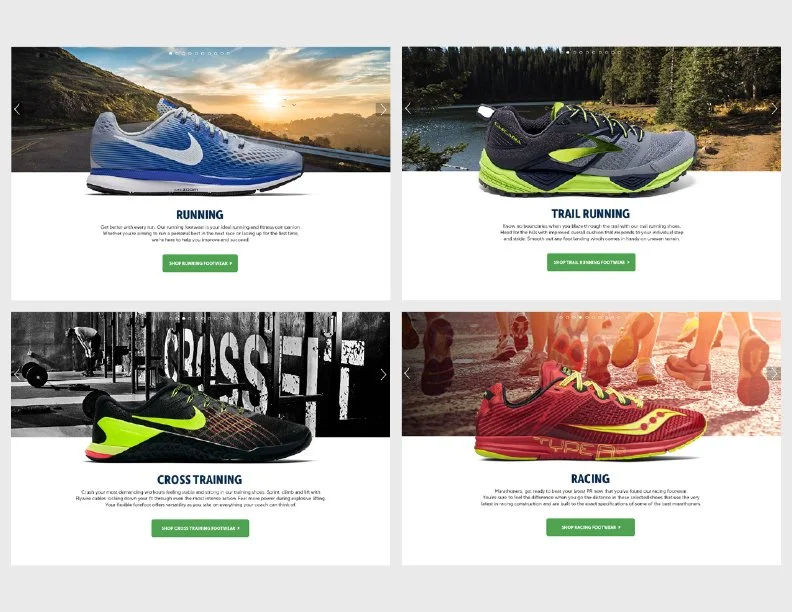
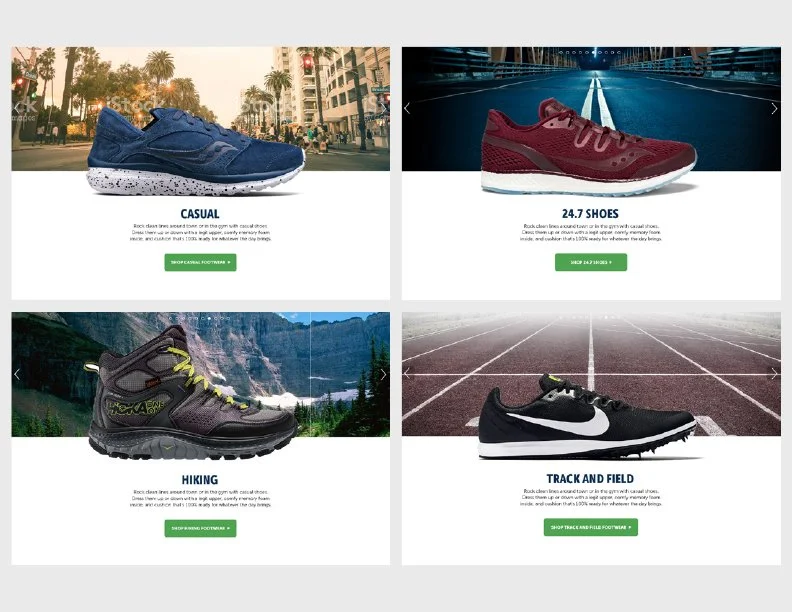
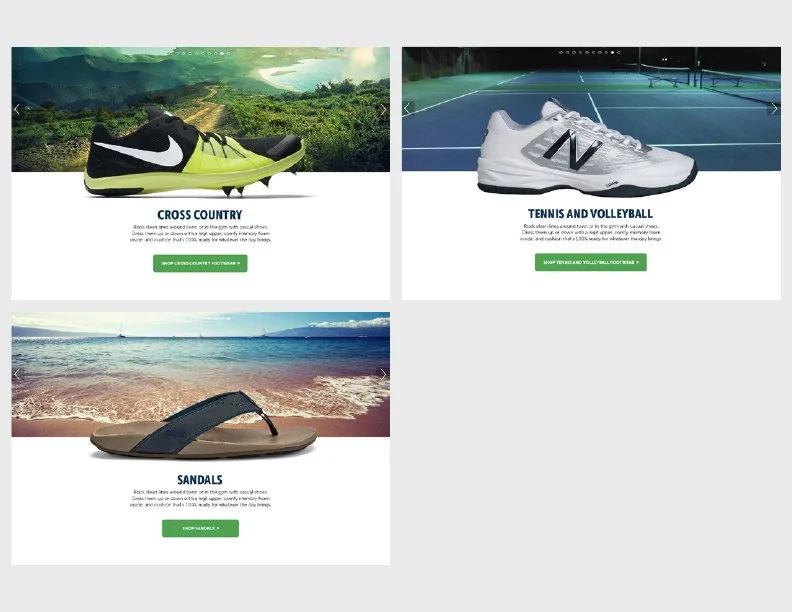
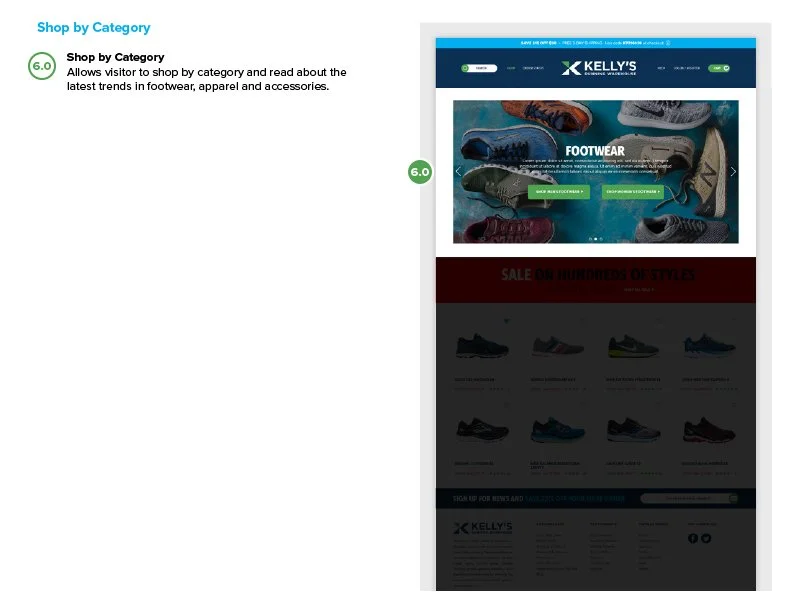
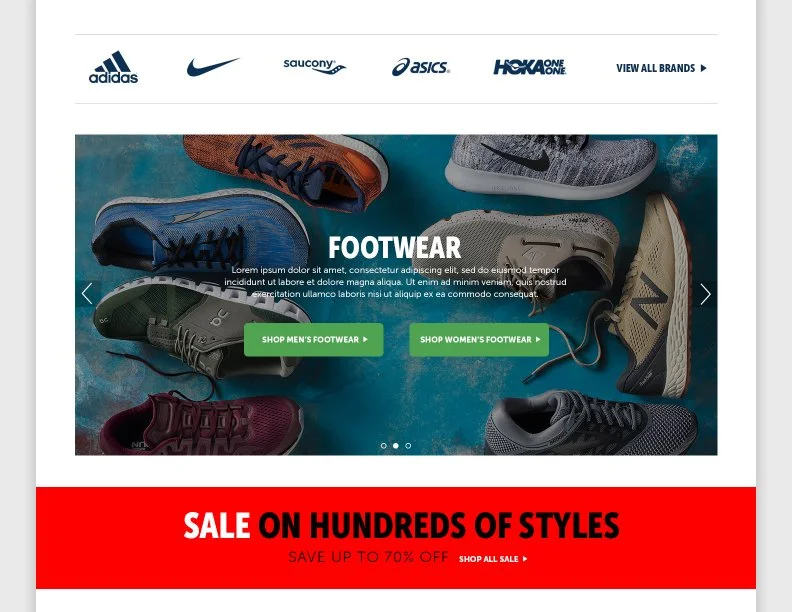
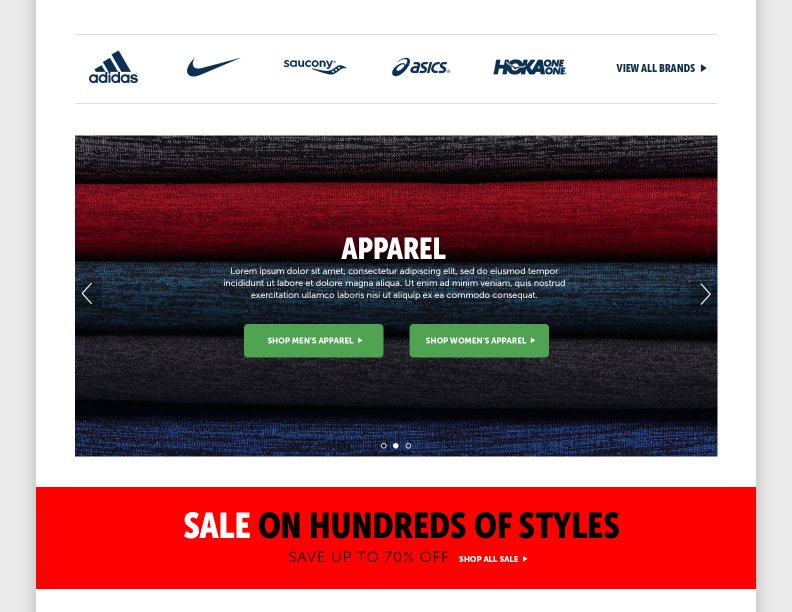
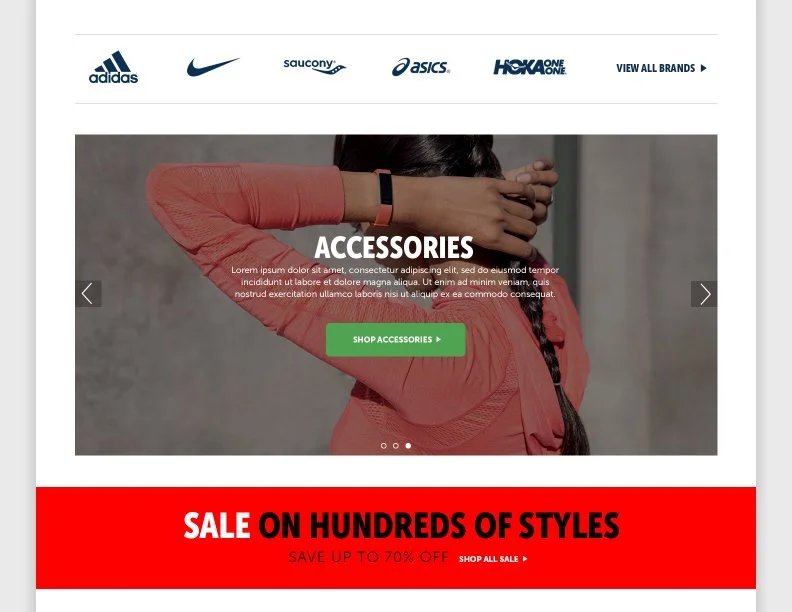

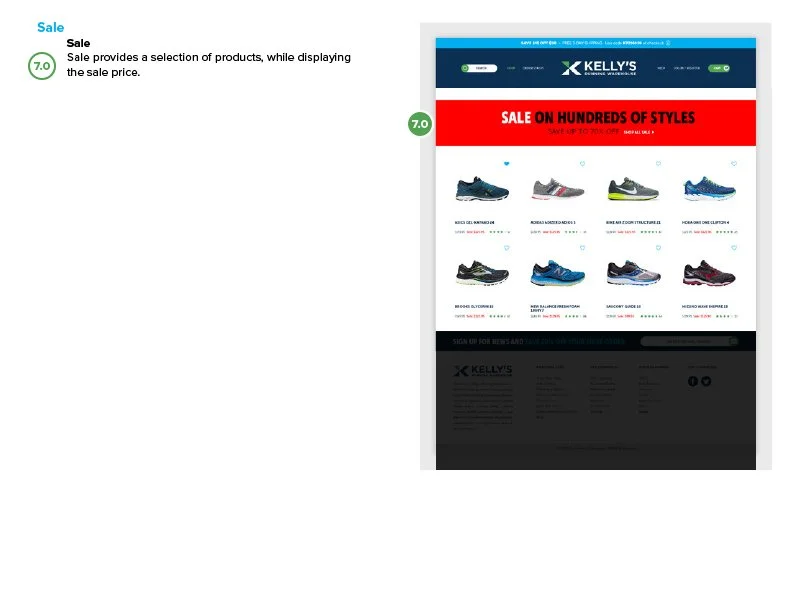
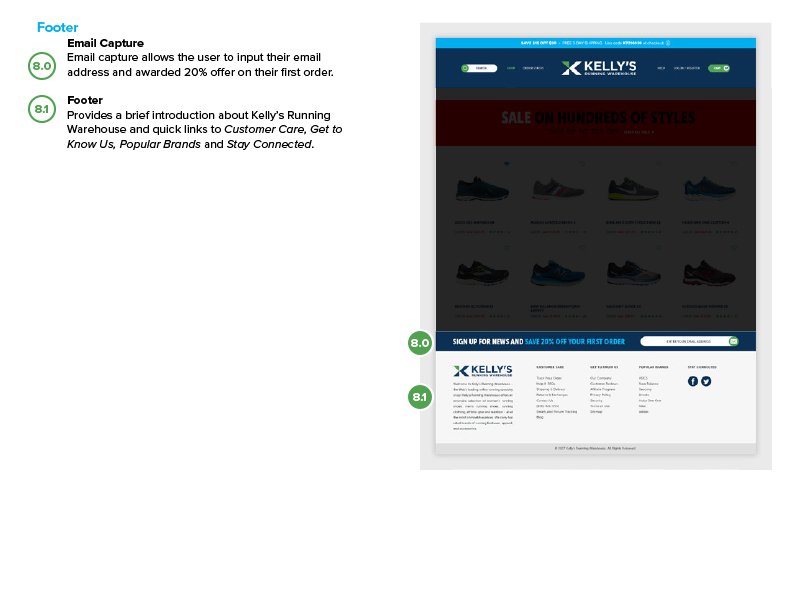
Turning the Pitch Into the Experience
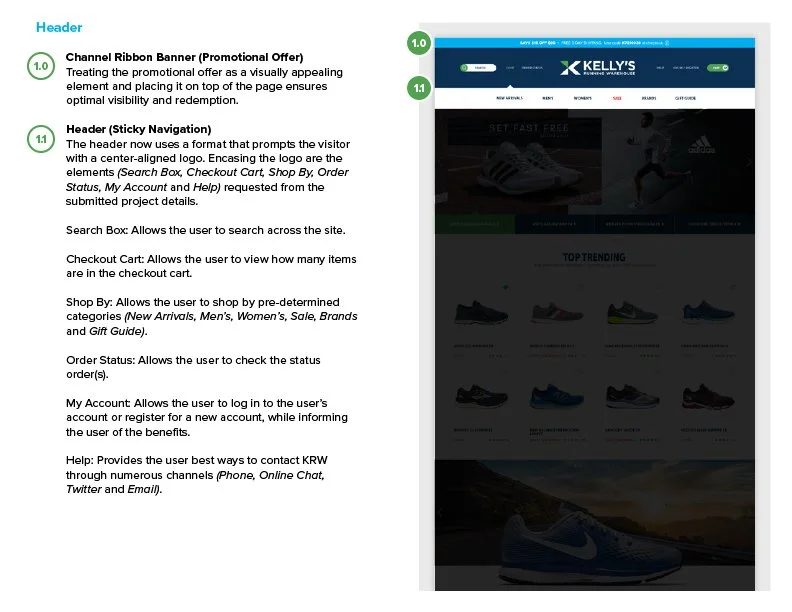
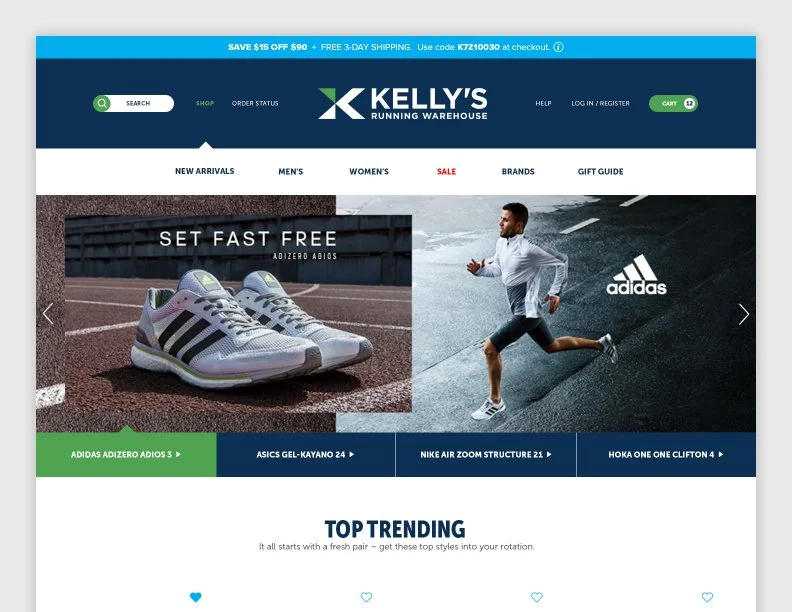
Homepage
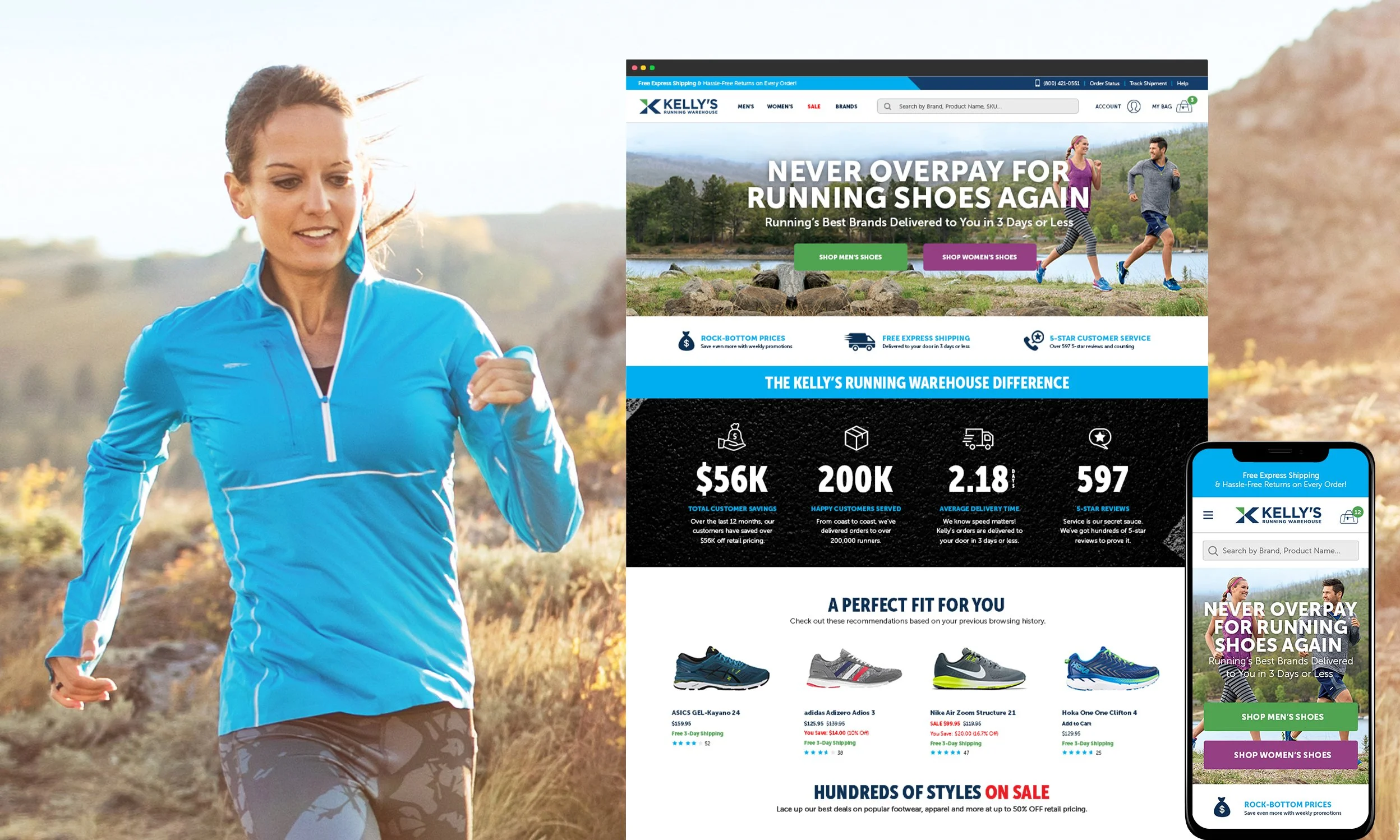
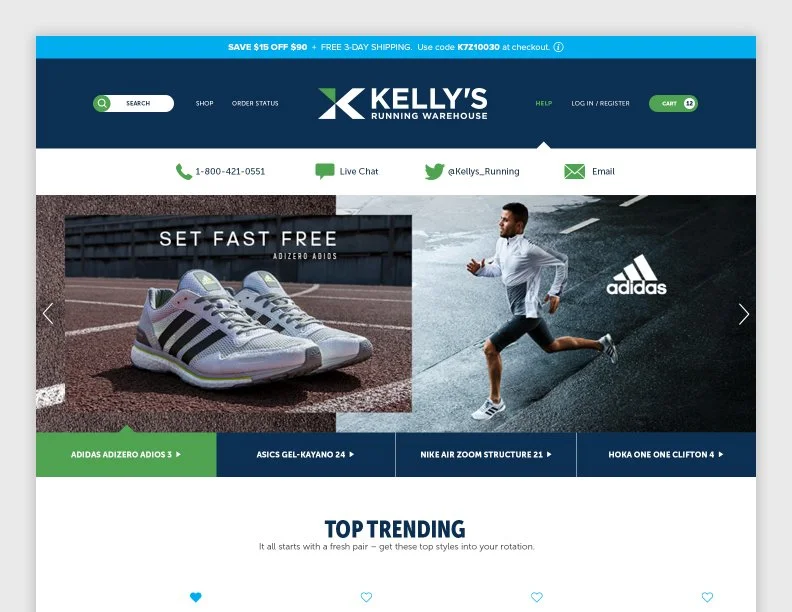
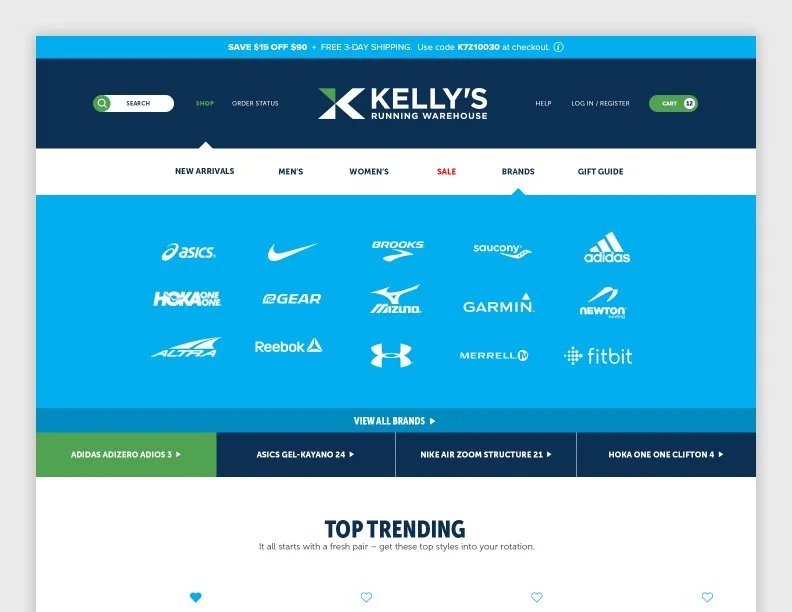
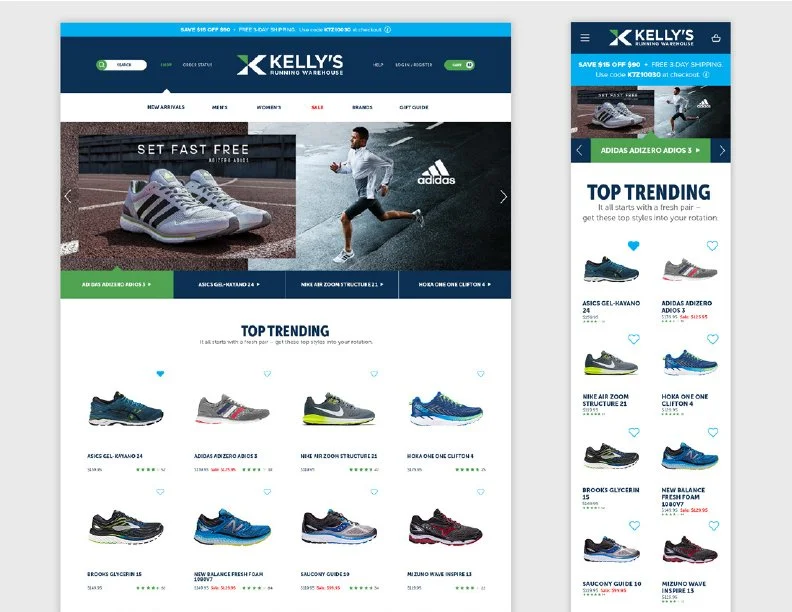
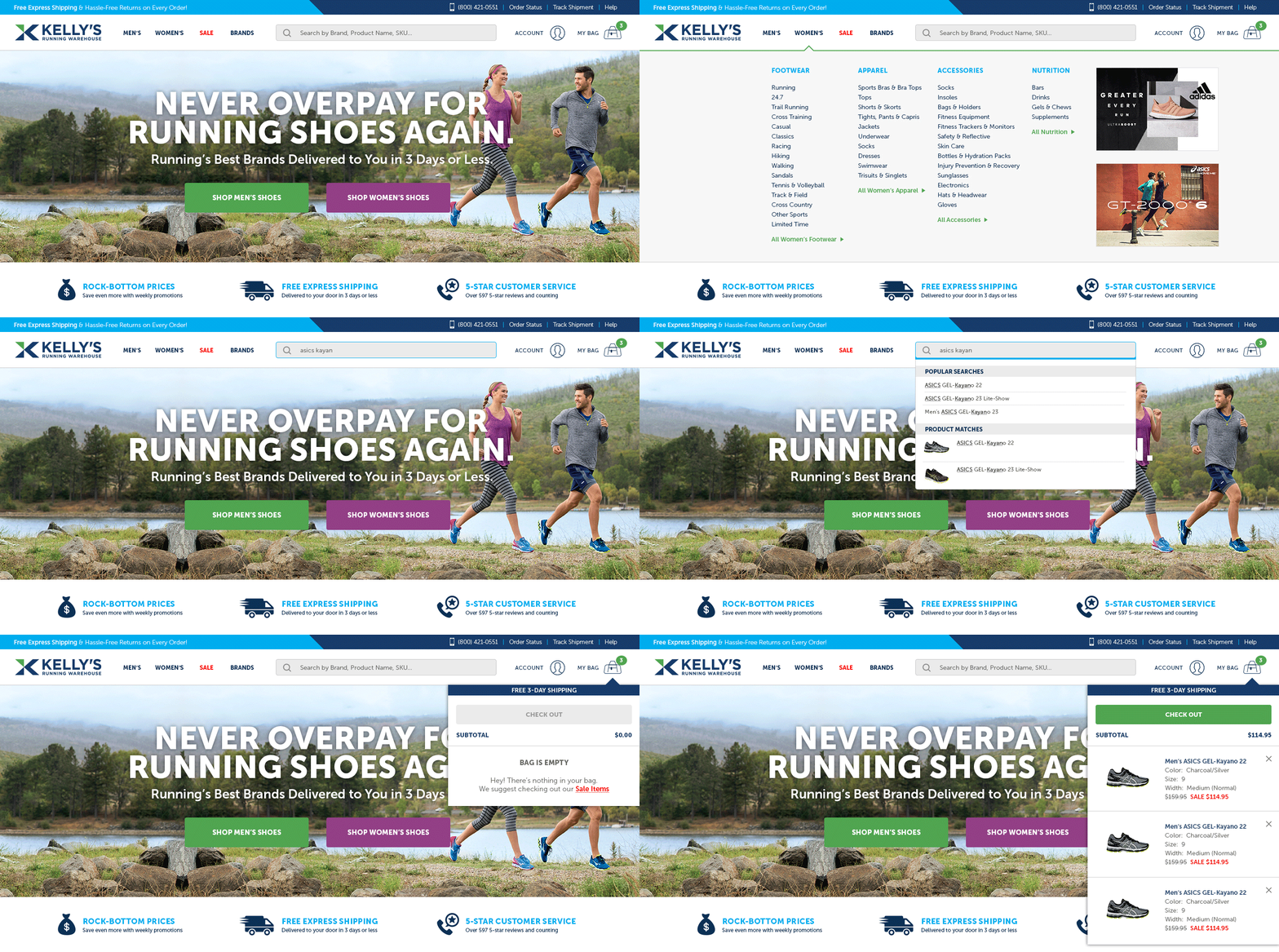
The old homepage tried to do a lot without giving customers a clear place to start. Products, promotions, brands, and categories were all competing for attention. For a business built around constantly changing inventory, that made shopping harder than it needed to be.
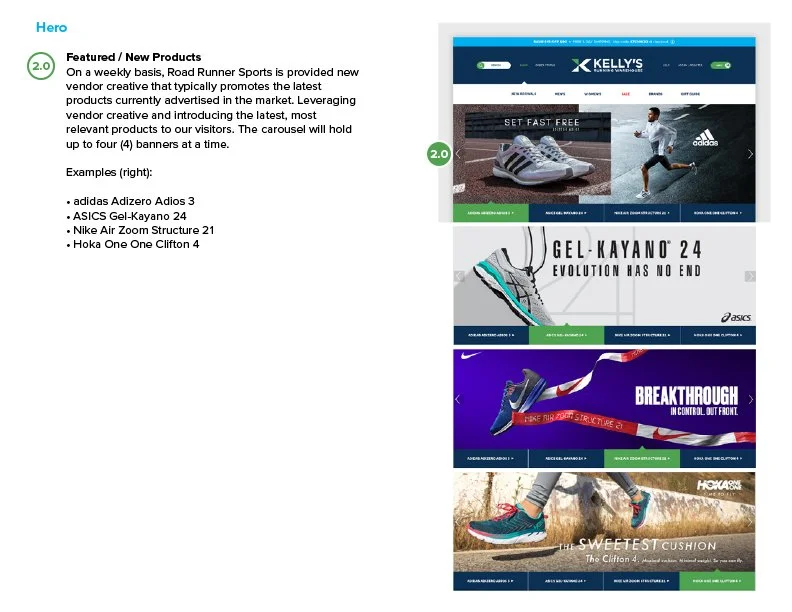
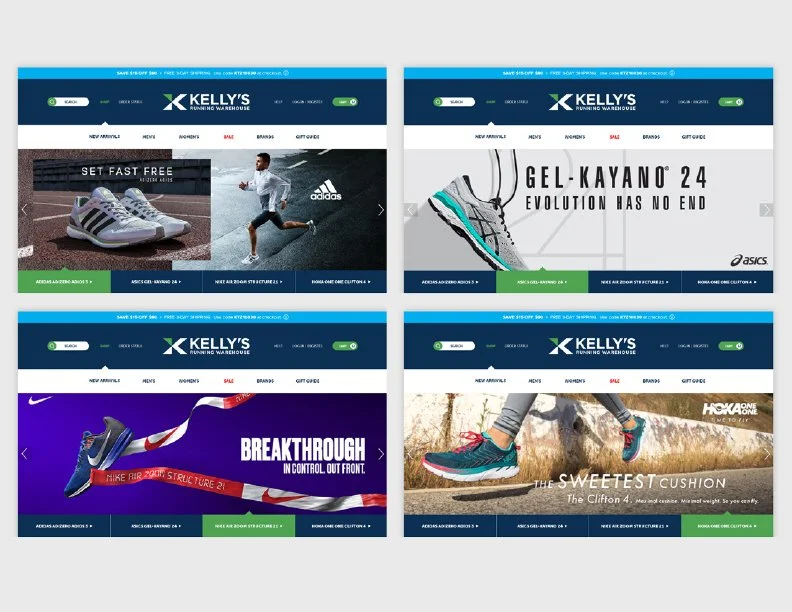
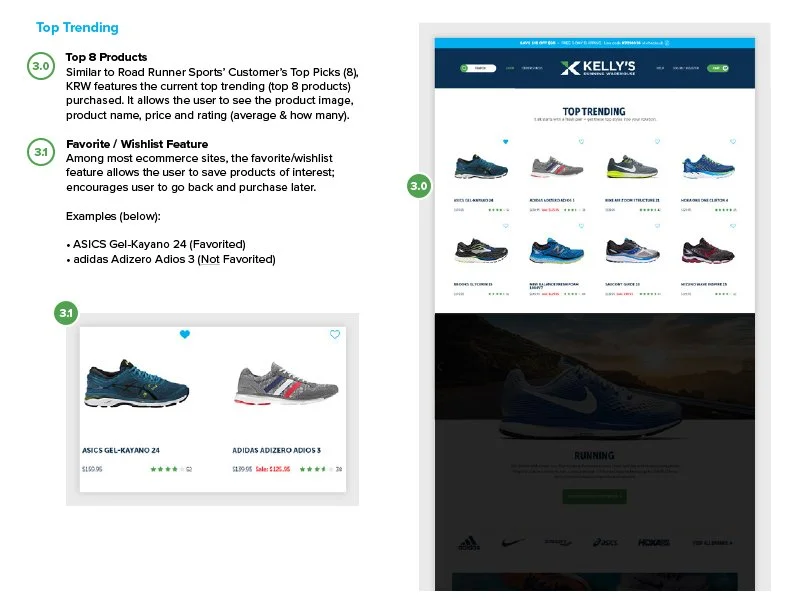
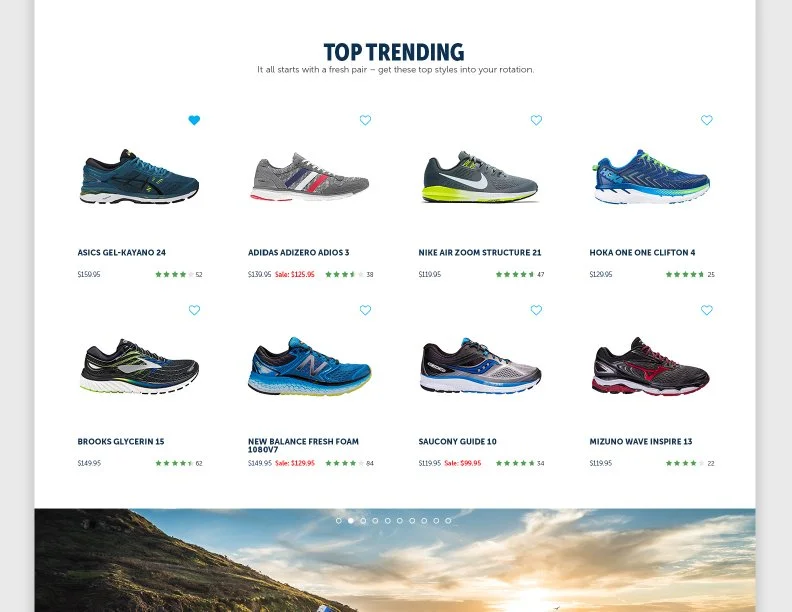
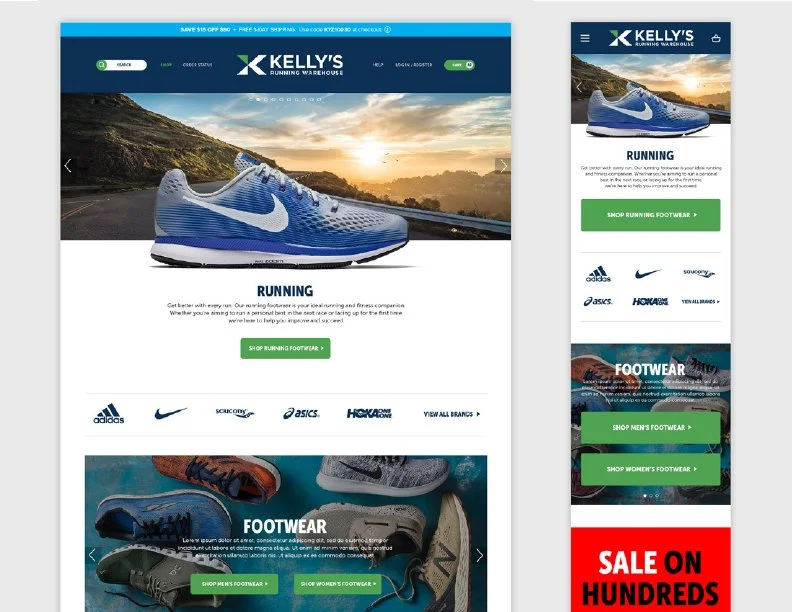
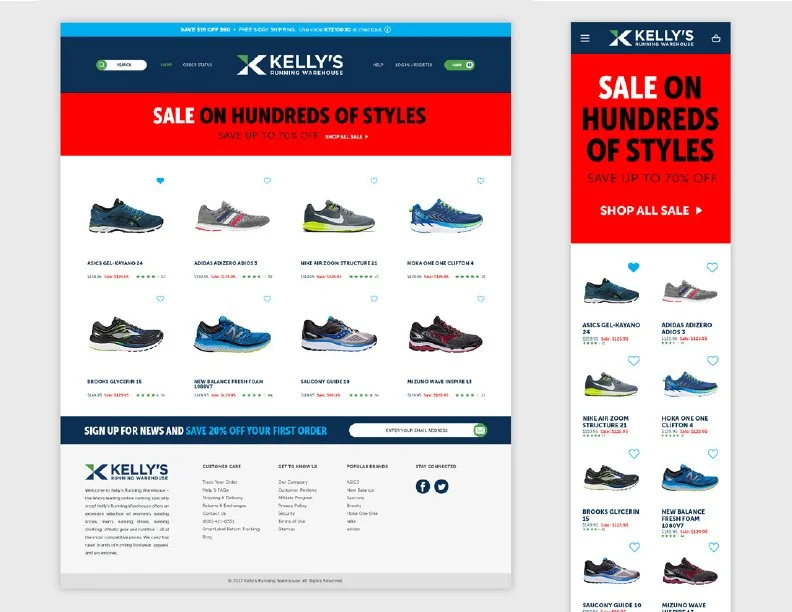
So I started with hierarchy. What do customers need to know first? Where do we want them to go next? The new homepage created clearer paths into Men’s, Women’s, Sale, featured brands, and product recommendations while giving promotions more room to actually stand out.
Trust mattered too. Free express shipping. Hassle-free returns. Rock-bottom pricing. Customer reviews. Instead of letting those benefits disappear throughout the site, I brought them forward and made them part of the shopping experience.
The homepage also gave the business more flexibility. Best sellers could change. Sales could rotate. Brands could be featured. Inventory could move. The website didn’t need to stay the same because the business certainly didn’t.
Looking at it now, some of these decisions feel obvious. At the time? They weren’t obvious to me yet. I was learning how to think beyond what looked good and start asking what the page actually needed to do.

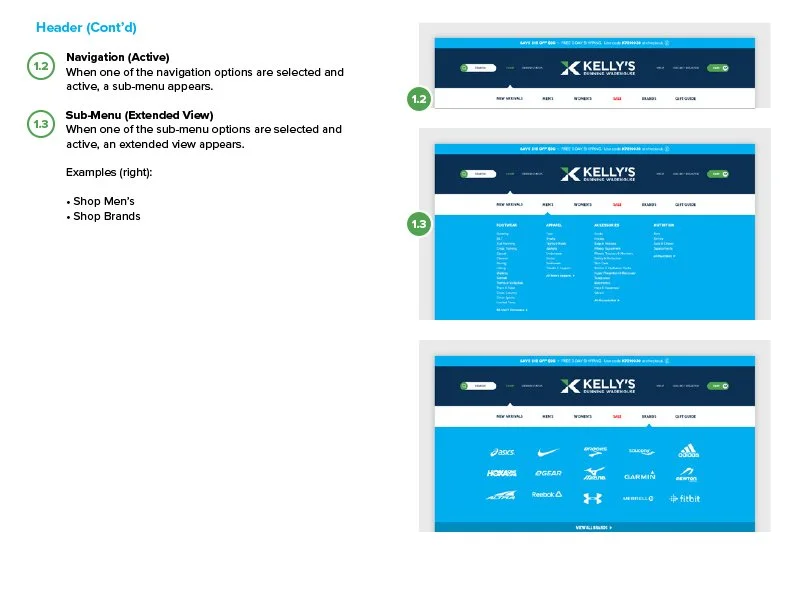
Navigation
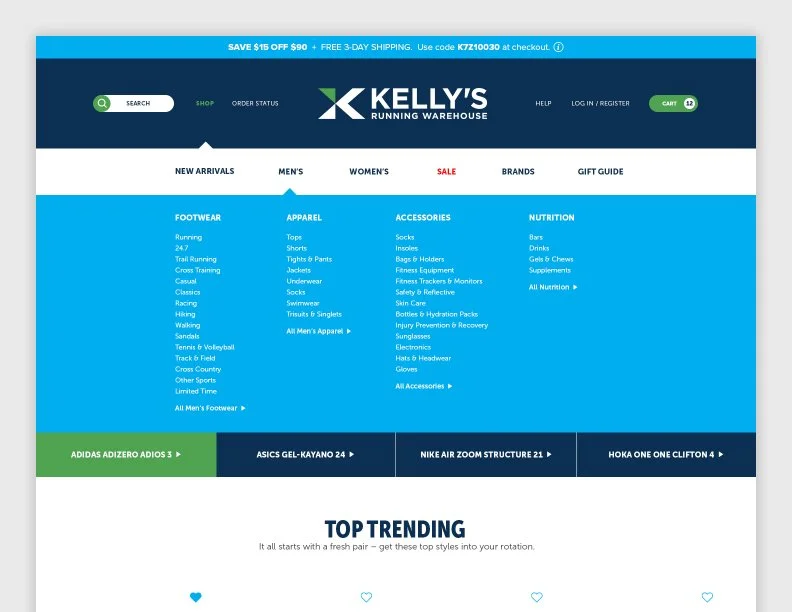
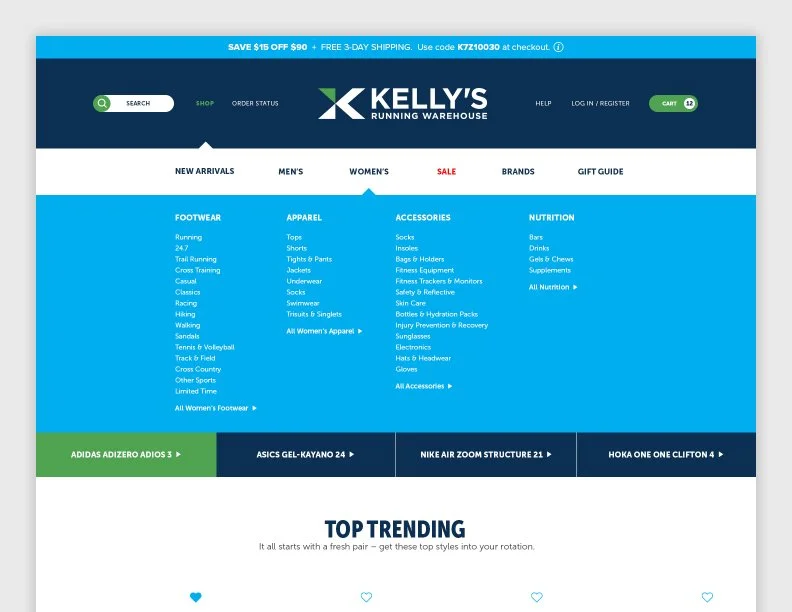
The old navigation was trying to do too much. There were too many options competing for attention, which made something as simple as finding a pair of shoes harder than it needed to be.
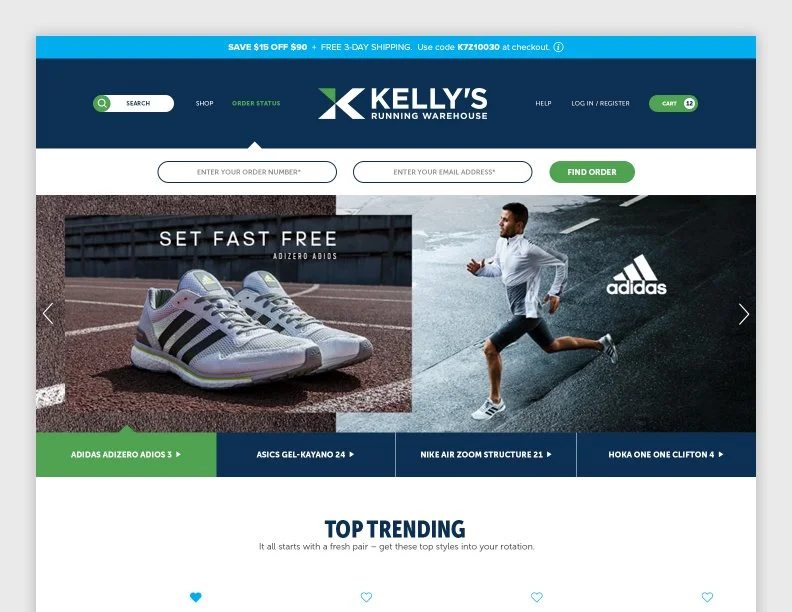
I simplified the main navigation around four clear paths: Men’s, Women’s, Sale, and Brands. Search also became much more prominent, giving customers a faster way to find exactly what they were looking for by brand, product, or even SKU.
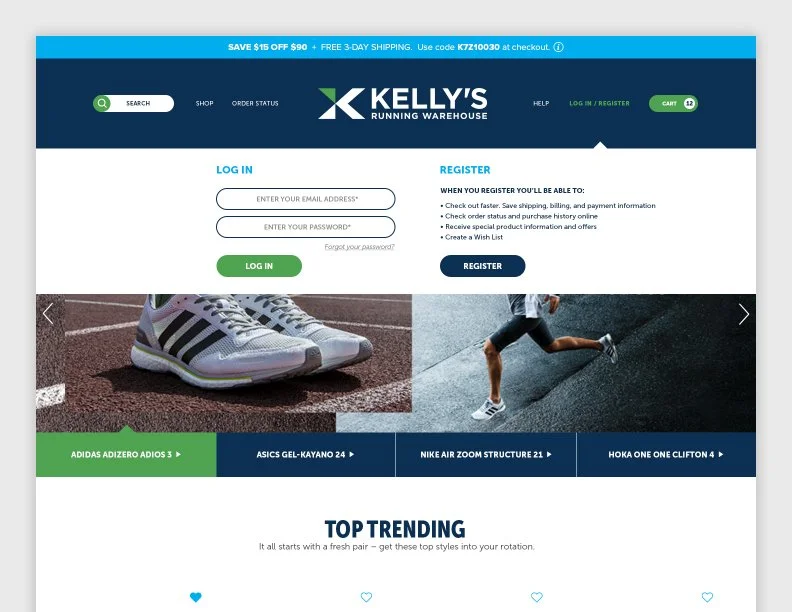
I also cleaned up the utility side of the experience. Account access became simpler. The shopping bag was easier to find. And Free Express Shipping & Hassle-Free Returns finally had a permanent home at the top of every page.
Looking back, the solution seems pretty simple. And that was kind of the point. I was learning that sometimes making an experience better meant knowing what to take away.
Product Listing Page
The Product Listing Page had one big job: help people find the right product without making them work for it. With hundreds of shoes across different brands, sizes, widths, and categories, there was a lot to sort through.
I cleaned up the layout and gave the products more room to breathe. Pricing became easier to scan. Sale pricing stood out. Reviews, color options, and shipping benefits were brought forward so customers could compare products without clicking back and forth between pages.
Filtering was a big part of that too. Brand. Width. Size. Category. The goal was to give customers enough control to narrow things down without making the experience feel overwhelming.
This was where I really started thinking about eCommerce differently. Sometimes the design wasn’t about adding something exciting. It was about removing as much friction as possible between someone and the product they were looking for.

Product Detail Page
The Product Detail Page was probably one of the areas where I learned the most. There was so much information that needed to live on one page, but I didn’t want it to feel like everything was fighting for attention.
So I started breaking things down. The product needed to be the focus. Pricing and savings needed to be clear. Color, size, and width needed to be easy to select. Reviews and free express shipping were important too, especially when someone was getting closer to making a purchase.
For everything else, I introduced tabs for recommendations, product details, reviews, and sizing. It kept the page cleaner without taking information away. Customers could dig deeper when they needed to.
At the time, I was still learning what made a good Product Detail Page. A lot of it came down to asking myself really simple questions. What does someone need to know? What do they need to do next? And how do I make both of those things easier?

Before the Redesign
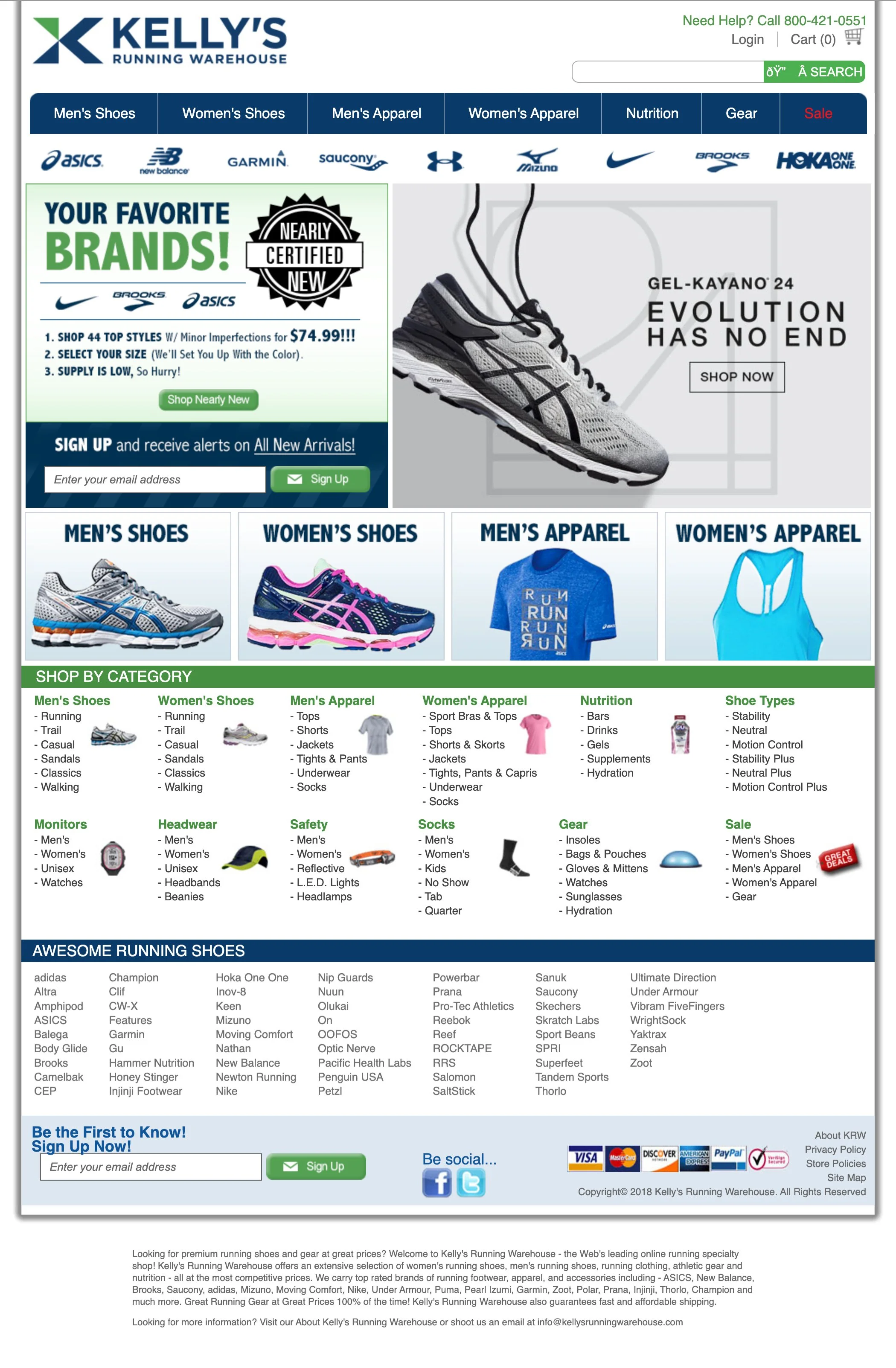
The original Kelly’s Running Warehouse website had a lot going on. Products. Categories. Brands. Promotions. Email capture. Nearly everything was competing for attention at the same time.
There was plenty to shop, but not much hierarchy helping customers figure out where to start. Navigation was dense. Search was easy to miss. And the homepage relied heavily on fitting as much information as possible into a relatively small space.
The experience also wasn’t responsive, which became a much bigger problem as more customers started shopping from their phones. What worked on desktop simply wasn’t going to translate to a growing mobile audience.
There was definitely a lot to untangle. But that was also what made the redesign exciting. I wasn’t looking at one thing that needed fixing. I was looking at an opportunity to rethink almost everything.
Leaving Behind Something I Was Proud Of
By the time Kelly’s Running Warehouse launched, I wasn’t there anymore. I had accepted a new opportunity at Smashtech and moved on to the next chapter of my career.
So I missed the big debut… But I definitely heard about it.
The CEO loved the redesign. I was told he was proudly telling people that Kelly’s now had a better eCommerce website than Road Runner Sports. For my first full eCommerce redesign? Yeah. That felt pretty damn good.
But beyond the reaction, there was a real business reason behind everything we built. Kelly’s helped move older inventory passed down from Road Runner Sports. Products needed to be easier to find. Easier to shop. Easier to sell. The redesign gave the business a much stronger experience to help do exactly that.
I didn’t get to stick around and see where it went next. And that’s okay. I got the opportunity I fought for. I stretched myself creatively. I learned a ton. And I left behind something the company was genuinely excited about.
That was a win.
Lesson Learned
Raising Your Hand Before You’re Completely Ready
Here’s the thing. This project wasn’t actually mine.
Another designer and I were both given the opportunity to pitch for it. One of us would ultimately get to lead the redesign.
And I wanted it. Like, really, really, really wanted it!
I had been doing good work at Road Runner Sports. I was fast. Reliable. People knew they could throw something my way and I’d get it done. But I was ready for something bigger. Something that would push me creatively and let me prove I could do more than the work I had already been doing.
The funny part? I had never redesigned an eCommerce website before. Not one. So was I technically the most obvious person to raise my hand and say, “Yep, I can do this”? Probably not.
But I did anyway.
I had three days to put together my ideas, and something in me just clicked. I researched everything. Thought through everything. Probably overthought a few things. And somehow what started as a pitch turned into 41 pages.
Was that a little excessive? Absolutely. Do I regret it? Not even a little.
Because I got the project.
And looking back, I’m really glad I didn’t wait until I felt “qualified enough” to go after it. I didn’t know exactly how I was going to redesign an entire eCommerce experience yet.
I just knew I wanted the chance to try.
That’s something I’ve carried with me ever since. Sometimes you don’t feel ready because you’ve never done the thing before.
I guess that’s kind of how doing something for the first time works. Ha!
Raise your hand anyway 🙋♂️